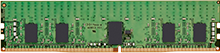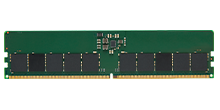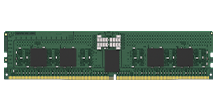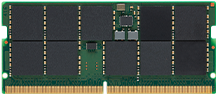
When you’re building or upgrading a server, it’s tempting to focus on CPUs and storage first. But the type of memory you choose can have just as much impact on performance, reliability, and scalability. In fact, memory architecture often dictates how efficiently your workloads run, whether it’s a virtualized environment, a database cluster, or a compute-heavy AI workload.
Server memory isn’t one-size-fits-all. From UDIMM and RDIMM to LRDIMM and MRDIMM, each type offers its own balance of speed, stability, and capacity. Add features like ECC (Error Correction Code) support, and multi-channel configurations, and the landscape quickly becomes more complex and more important to get right.
In this article, we’ll break down the main types of server memory, explain how they work, and show how each one influences overall server performance. Whether you manage a small business server or an enterprise data center, understanding these differences will help you make smarter, future-ready hardware choices.
The main types of server memory
When browsing Dual Inline Memory Module, or DIMM, options for your server, it’s easy to get lost in the specs. But different types of DIMMs are designed for specific workloads, capacities, and performance goals. Choosing the right module starts with understanding how server memory types differ and where each one performs best in practice. Below, we cover each type, what it is best suited for and how it impacts real-world performance.
UDIMM (Unbuffered DIMM)
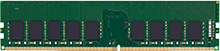
An Unbuffered Dual Inline Memory Module (UDIMM) is a type of RAM module that connects memory components (DRAM) directly with the memory controller inside the processor. Because there’s no buffering required, the signal path is shorter and simpler, which can reduce latency and power use compared to other server-class memory modules.
UDIMMs are available as ECC (72-bit data width or x72) and non-ECC (64-bit data width or x64). ECC UDIMMs feature extra DRAM chips to support Error Correction Code from the processor, providing a more stable system that can correct bit errors and prevent crashes.
These modules also use server-class DRAM components and are tested to higher tolerances for systems that require 24/7 operation and heavy workloads. A processor and BIOS must support the ECC function in order to take advantage of this data integrity feature. Non-ECC UDIMMs are more commonly used in desktop systems, which don’t typically support the ECC function, and are not designed for round-the-clock operation.
UDIMMs are less suitable for servers as they are limited by how much capacity they can support. High-capacity memory modules require registers to handle the large number of memory chips on the module. Before choosing UDIMMs for a server or workstation, check your system manual or our memory configurator to make sure that your motherboard and CPU support unbuffered memory, as well as the ECC function. Follow the configuration guidelines for your system and use identical modules to match the channel architecture for the best performance.
Where UDIMMs work best:
Small servers, workstations, home labs, NAS systems, or entry-level systems where cost, simplicity, and lower power consumption are more important than maximum capacity or enterprise-level reliability.
RDIMM (Registered DIMM)
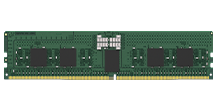
A Registered DIMM (RDIMM) is an ECC supporting server-class memory module that places a Registered Clock Driver (RCD) chip (a small buffer) between the system’s memory controller and the DRAM chips. The Register reduces the electrical load on the memory controller and redrives the clock signal, improving signal integrity. It ensures that the memory clock signals remain strong and synchronized between all DRAM chips, preventing timing mismatches that could cause data corruption.
Because of the Register buffering and full ECC (Error Correction Code) support in RDIMMs, systems can reliably scale to higher memory capacities than unbuffered memory. The trade-offs include slightly higher latency (due to the extra register stage) and increased cost versus unbuffered modules.
Where RDIMMs work best:
RDIMMs are designed for enterprise servers, virtualized hosts and data centers where high memory capacity, reliability, and scalability are critical.
LRDIMM (Load Reduced DIMM)
A Load Reduced DIMM (LRDIMM) is a server-class DDR3 or DDR4 memory module that places buffer chips between the memory controller and the DRAM. These buffers isolate the DRAM load from the memory controller, reducing electrical stress and improving signal integrity when the module carries many ranks or when many modules are configured per channel.
Because of this buffering and the technique of “rank multiplication” (making multiple physical ranks appear as fewer logical ones), LRDIMMs allow higher module capacities using more ranks than Registered DIMMs. Trade-offs: slightly higher cost but gains in scalable capacity and bandwidth in high-density systems.
Where LRDIMMs work best:
LRDIMMs are best suited for high-capacity enterprise servers, virtualized hosts and data centers where maximum memory capacity and density matter.
MRDIMM (Multiplexed-Rank DIMM)
MRDIMM is a next-generation DDR5 server memory module type designed for high-performance workloads. It uses a multiplexing register and buffers to allow two memory ranks to operate simultaneously on a single DIMM, effectively doubling the data transferred per memory channel.
Because MRDIMMs maintain the DDR5 physical and electrical interface while applying this multiplexing, they offer higher bandwidth (e.g., up to 8800MT/s and beyond) and potentially lower latency than conventional DDR5 RDIMMs in supporting platforms.
MRDIMMs are still emerging, so you’ll need compatible platforms like the Intel Xeon 6 to take full advantage. Key trade-offs: higher cost, emerging support ecosystem, and still early adoption. The benefits are most significant when memory bandwidth is needed.
Where MRDIMMs work best:
MRDIMMs are best suited for memory-intensive environments like AI inference/training clusters, high-performance computing (HPC) servers, large-scale in-memory databases or multi-tenant virtualized data centers where maximum bandwidth matters more than the lowest possible cost.