Ask an Expert
Planning the right solution requires an understanding of your project and system requirements. Let Kingston's experts guide you.
Your web browser is out of date. Update your browser now for better experience on this site. https://browser-update.org/update-browser.html

Rob May is the founder and managing director of ramsac. He has a team of over 100 consultants working with him to deliver technology and cybersecurity services/support (and has done so for over 30 years).
Rob is the UK Ambassador for Cybersecurity for the Institute of Directors, and is ranked #5 in the Global rankings for Cyber Security Thought Leaders/Influencers. He is on the Advisory Board of The Cyber Resilience Centre for the South East, working with industry, academia and law enforcement. He is also an author, a thought leader, and an award-winning international speaker.
As MD of ramsac, a Managed Service Provider (MSP) for nearly thirty years, I have seen an awful lot of challenges. We have had recessions, technology shifts, and pandemics, along with a backdrop of economic and political pressures.

Lockdowns in their various formats and durations have undoubtedly caused hardship and damage to many businesses, but there are also businesses that are thriving in this current economy. I deal with a lot of businesses that are currently doing extremely well. The onset of the pandemic certainly changed working life for most people but, on the other hand, some have experienced positives.
Technology support companies typically charge per user per month and many will have seen decreasing annuities due to supporting clients with furloughed staff. There have also been changing business practices and business models where demand has most certainly offset the decrease in other areas.
Today’s model of work has become remote and it has driven the need to upscale cloud and data center provision. Many businesses are investing in technology, reconfiguring office space to reflect these new needs, and relocating server infrastructure. These needs and demands have spurred an increase in server upgrades (both on premise and in the cloud/data center). This is a sensible development, but I see many organizations getting it wrong.
A typical upgrade is going to comprise both memory and storage upgrades.
A memory upgrade is the easiest way to improve and optimize server performance. It is usually required when increasing virtual workloads, adding more users, implementing a new database program, or perhaps when adding commerce functionality to a website. Upgrading memory in your servers can support larger workloads, provide faster responses for those using the cloud, and improve speed for applications living in memory.
Increased server memory allows you to have more virtual machines and can increase allocation to maximize your existing hardware. Virtualization lowers total cost of ownership and allows more memory for Virtual Desktop Infrastructure (VDI), which means a faster response when apps sit in memory. (VDI is desktop virtualization where the desktop environments are hosted on a central server and delivered to end clients over a network.)

Storage is important for server virtualization in terms of capacity and, most significantly, in terms of speed. Random input/output and high data access demands can be severely limited by traditional mechanical hard drives in a virtualized host server. Servicing applications, users, and retrieving data have become limiting factors in overall system performance. Installing the right server memory along with non-mechanical solid-state drives (SSDs) provides the ideal accelerator for improving performance and capacity, which allows for virtualization and eventually being able to do more with less.
As server storage is increasingly offsite in data centers and is becoming more cloud-based, greater demands are placed on both the storage drives and the memory infrastructure. SSDs have fast-retrieving capabilities and enable cloud services to operate at optimum efficiency for each type of data being processed. A well-designed storage solution will deploy a tiered drive model (differing speed and price drives for different storage and access purposes) which ensures an organisation has the right data on the right tier to maximize performance while remaining economical.
It starts at the component level and many people do not properly consider memory (which is a big part of the server price). Server DIMM memory modules are either going to be unbuffered uDIMMs, registered RDIMMs, or load-reduced LRDIMMs. All three types are compatible physically, but you must specify the correct DIMMs as they CANNOT be mixed.
It’s also vital to match the correct memory to the exact processor you have in each server. The number of memory channels and memory modules can have a significant impact on performance. People need to keep this in mind when considering a staged upgrade. Do not buy 12 months of memory today for an upgrade that goes beyond your requirements or even limits your performance. Plan and make sure you get expert advice on the configuration for each individual server.
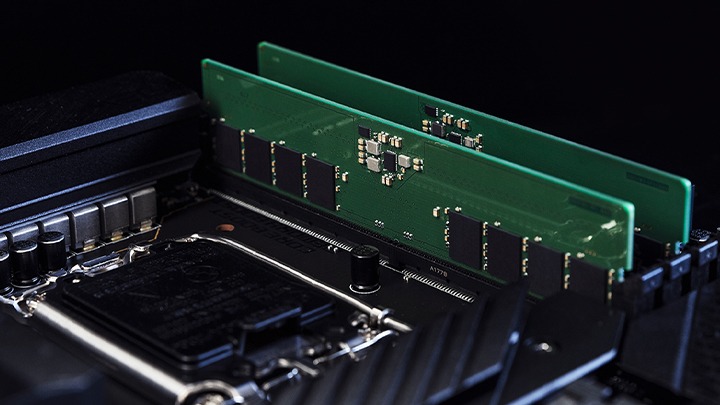
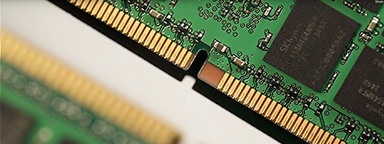
Memory standards and specifications are stipulated by an organization called JEDEC that is globally responsible for the development of open standards for the microelectronics industry. Paying attention to its standards and specifications can help with informed decision making. For example, current considerations on motherboards really need to look at the new standard for DDR5, which dramatically increases memory density and speed. DDR5 DIMMs will have the same number of pins (288) as DDR4 DIMMs, but the pin layout is different and can only be used in a dedicated DDR5 slot.

Upgrades are a shrewd decision in our ever-changing, ever-evolving business landscape. Planning, specifying, and buying for the right upgrades, however, is an art! Get it wrong and you will fail to get optimum performance and waste time and money. Do not rely solely on the advice of your server manufacturer either as, in my experience, they will rarely take the time to work through your plans and/or look correctly at all the configuration/performance issues but rather try to sell you more memory. Personally, I would use the “Ask an Expert” team at Kingston, who will be able to advise you on nearly all server platforms. Their advice is rarely ever wrong!
Do not simply replace servers. Get good advice and look at an intelligent upgrade roadmap that covers your current needs and your projected growth.
#KingstonIsWithYou
Was this helpful?
Planning the right solution requires an understanding of your project and system requirements. Let Kingston's experts guide you.

No products match your current filter selection. Try adjusting your filters to explore more options.
How power loss protection helps SSDs safeguard data during sudden power loss.
A real‑world look at modernizing server infrastructure for high‑traffic digital platforms.
SSD test beds for enterprise servers should be done with the real hardware, OS and data. We’ll explain why.
A look at how companies manage their systems when cloud computing is unavailable.
How ECC in memory and SSDs protects data integrity and reliability in server environments.
Your guide to EU data sovereignty, risks, and secure data storage strategies.
10 expert tips for buying server memory: ECC, compatibility, and performance.
Explore server memory types and how each affects server performance and reliability.
Key drivers for IT adoption include the many benefits in virtualizing a data center and consolidating server hardware.
From performance to DDR5, this Xeon 6 guide helps enterprises understand next-gen processors.
Machine learning training is resource-intensive, but how does a Kingston SSD measure up to the task?
Learn why DDR5 server memory improves data center performance and efficiency.
Kingston and Taiwan Intelligent Robotics Company highlight smart manufacturing and AI, powered by Kingston’s trusted technology.
Learn how innovative memory solutions are transforming laptops, desktops, and data centers.
Explore how SSDs are transforming data centers with advanced technology and performance.
Learn how Kingston SSDs transformed Mission Digital’s workflow with speed & capacity.
Join Simon Bestman to explore SSD benefits over HDDs and the latest storage trends.
Reasons why a NAS would benefit your home or small office setup.
System Integrators in India grew their business and reputation using Kingston’s reliable products.
Here is a list of USB security features to consider for data protection.
Learn what the 3-2-1 data backup method is and why it is your best defense against ransomware.
Simon Besteman explains the current and future challenges for data centers.
Explore DRAM technology’s evolution and gain insights into future trends in our eBook.
The differences between SSD classes lies in two components; the processor and the NAND memory.
Learn how Terabytes Written and Drive Writes Per Day are defined, and their differences.
We explore the different types of memory & how to make the right choice for your server.
Read the whitepaper to learn how DC600M helps vSAN demand performance and efficiency.
Kingston sets industry standards with unwavering commitment to quality and reliability.
Kingston and QNAP have improved the efficiency of digital theaters with their hardware.
Questions to ask when seeking the right SSD for your organization’s data center.
Here are some key points to help you better balance price, performance, and longevity.
We explore the how media organizations can speed up workflows through storage and memory.
2023 has been a year full of challenges and innovations. But what will 2024 bring?
Elevate your data center with Kingston's VMware-compatible DC600M enterprise SSDs.
Kingston's server SSD and memory transformed Android Basha's production workflow.
Kingston storage solutions help improve performance photographer Ralph Larmann’s workflow.
DASH Pictures enhances their media production efficiency with Kingston SSDs.
Discover why upgrading your technology in this economy matters more than ever.
Server SSDs have higher endurance, better reliability, and improved performance over client SSDs.
We explore the benefits of upgrading vs. replacing, and how organizations can succeed.
Assess your existing server hardware to extend its lifespan and maximize your investment.
Learn about NVMe and why choosing it is beneficial to your organization’s infrastructure.
We discuss the journey of digital twin technology, exploring real-world examples for success.
In this whitepaper, we explain the benefits of SDS vs. its HW and SW RAID counterparts.
In this video, we explain how Kingston and 2CRSi work together to solve data center challenges.
Learn why APLIGO chose Kingston SSD and memory to support their system integration business.
Choosing storage products for your enterprise is a complex process. Kingston offers our expertise.
Learn how Kingston and QNAP solutions help optimize content creation.
Learn how Kingston supported a leading hosting provider with optimal configuration.
Kingston examines how its DC1500M Enterprise NVMe SSD affects workloads and compares to competitors.
In this eBook, we speak with experts about the journey of data storage, and what the future holds.
From shooting, to post-production, to encoding, to distribution at data centres, SSDs and RAM are powering the world of OTT Media & Entertainment (M&E) video and audio streaming.
We explore the top 12 tips small and medium size enterprises can take to enhance cybersecurity.
This infographic is about the different types of data centers, the myths, and Kingston's DC solutions.
We’ve examined several factors using unique research to identify what may impact markets globally in 2022.
2021 has been a year full of challenges and innovations. But what will 2022 bring?
Read our eBook, about the rise of digital transformation and what the future holds.
Bill Mew shares his thoughts how the largest security challenges need commitment from the boardroom.
Rob May shares his thoughts on how close we are to edge computing and the security it requires.
The high-performance DC500M Server SSD is the best storage choice for a pro videographer.
Memory and storage have evolved over the years. Get an insight from our industry expert.
Our partnership with Microchip’s RAID controllers helps deliver high performance for server storage.
Kingston helped optimize Simply Hosting’s storage in its data centers to ensure they were always on.
Learn how Kingston helped to lower power costs and increase performance so Hostmein could deliver on SLAs.
In this eBook, we speak with experts about IoT’s journey and prepare organizations for IoT’s future.
The pandemic has increased internet traffic which has placed importance on the role of data centers.
Cameron Crandall of Kingston helps you self-evaluate the need to move to your server storage solution to NVMe.
NVMe over Fabric helps CPUs to run more efficiently with lower latency and higher throughput.
Join industry experts to discuss how technology partners like Kingston support their business growth and sustainability.
Industry experts discuss topics like the key pillars of tech relationships, sustainability, and IT optimization.
Watch this webinar to discover the benefits of NVMe SSDs.
The switch to NVMe requires a full stack review from IT architects to ensure redundancy exists on every layer of the stack.
In this eBook, we talk to industry experts as we explore the benefits of artificial intelligence, how it’s fuelling data consumption and how you can prepare your organization for the opportunities it presents.
Here are seven of the predictions of what will drive NVMe adoption for 2021.
Test SSDs to know the real endurance, changes in latency and IOPS in sequential and random read or write scenarios.
Don’t pick the wrong type of SSD for your server. A wrong choice means a higher cost of ownership. Learn to pick the right SSDs.
What will 2021 bring in tech and trends? What do our KingstonCognate members and industry experts predict for the future?
Learn why the future of business depends on SSD-enabled SDS, and how SSD fits into software-defined storage solutions.
Learn how Hosteur supported their rapid growth & SLAs with Kingston Enterprise products & services.
Data centers should be using server SSDs. There are many benefits over client drives and costs have come down.
NVMe is now the standard protocol for SSDs to empower data centers and enterprise environments.
SDS hasn’t lived up to its hype but now that NVMe is more affordable the commodity hardware is ready to deliver.
Choosing the right SSD for your server is important since server SSDs are optimized to perform at a predictable latency level while client (desktop/laptop) SSDs are not. These difference result in better uptime and less lag for critical apps and services.
Industry expert Simon Besteman provide insight on why 5G demands edge computing in micro data centers.
Cloud and on-premise data center managers can learn a lot from supercomputing.
What are the demands of the Data Centers in these unprecedented times? Read this article from Industry Expert, Dr Sally Eaves & she will provide you with an insight on the demands.
Kingston delivered compatible memory that met the performance goals of i3D.net's servers, extending the service life of their existing hardware.
Why is Edge Computing Data Centers important for 5G? Download and read Kingston’s eBook on Edge Servers and the 5G rollout.
This whitepaper demonstrates how using Kingston Technology’s Data Centre DC500 SSDs can reduce your overall capital and licence costs by 39%.
Data Center 500 Series SSDs (DC500R / DC500M) – Consistency, predictability of Latency (response time) and IOPS (I/Os Per Second) performance.
Thanks to the service levels, quality, scalability and flexibility of Kingston’s cost- effective solutions, Aruba have seen an increase in the quality of service to their clients.
End-to-End Data Protection protects customer’s data as soon as it is transferred by the host system to the SSD, and then from the SSD to the host computer. All Kingston SSDs incorporate this protection.
SDS provides a policy-based control of data tiers, independent of the underlying storage hardware.
A percentage of space on an SSD is reserved for OP in firmware. OP can improve performance.
Kingston uses LSI® SandForce®-based controllers in some SSDs that use proprietary tech for Garbage Collection.
HPC can require massive amounts of data. SSDs consume a fraction of the power of their spinning disk.
Kingston datacenter SSDs provide excellent resiliency to protect sensitive data in OLTP workloads.
Frequently asked questions around SSD technologies and terms like SATA, M.2, NAND, RAID, NVMe, PCIe, SAS, and keying.
Storage can be the most challenging component for VDI performance.
Testing is a cornerstone of our commitment to deliver the most reliable products on the market. We perform rigorous tests on all of our products during each stage of production. These tests ensure quality control throughout the entire manufacturing process.
Learn how DDR4 delivers faster speeds, reduced power consumption and increased capacity over DDR3.